What Do Poison Dart Frogs Eat? Wild vs Captive Diet
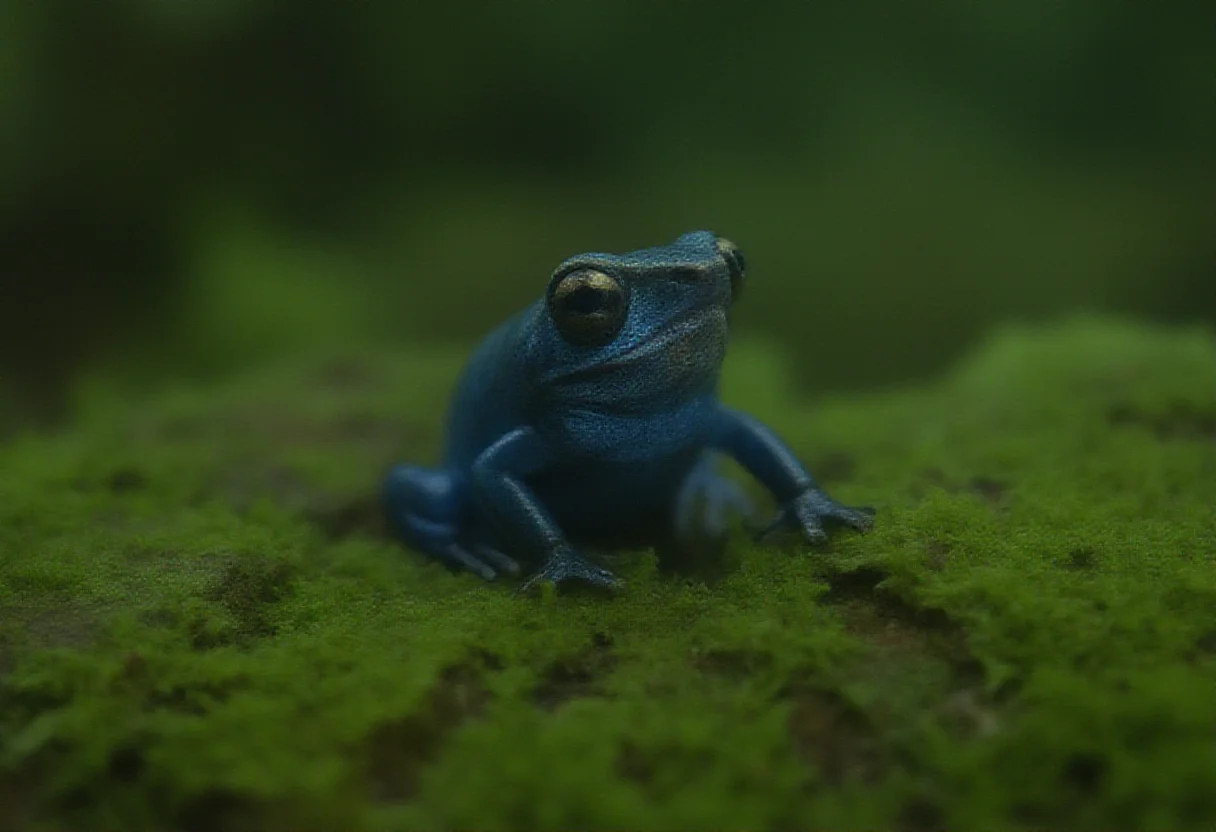
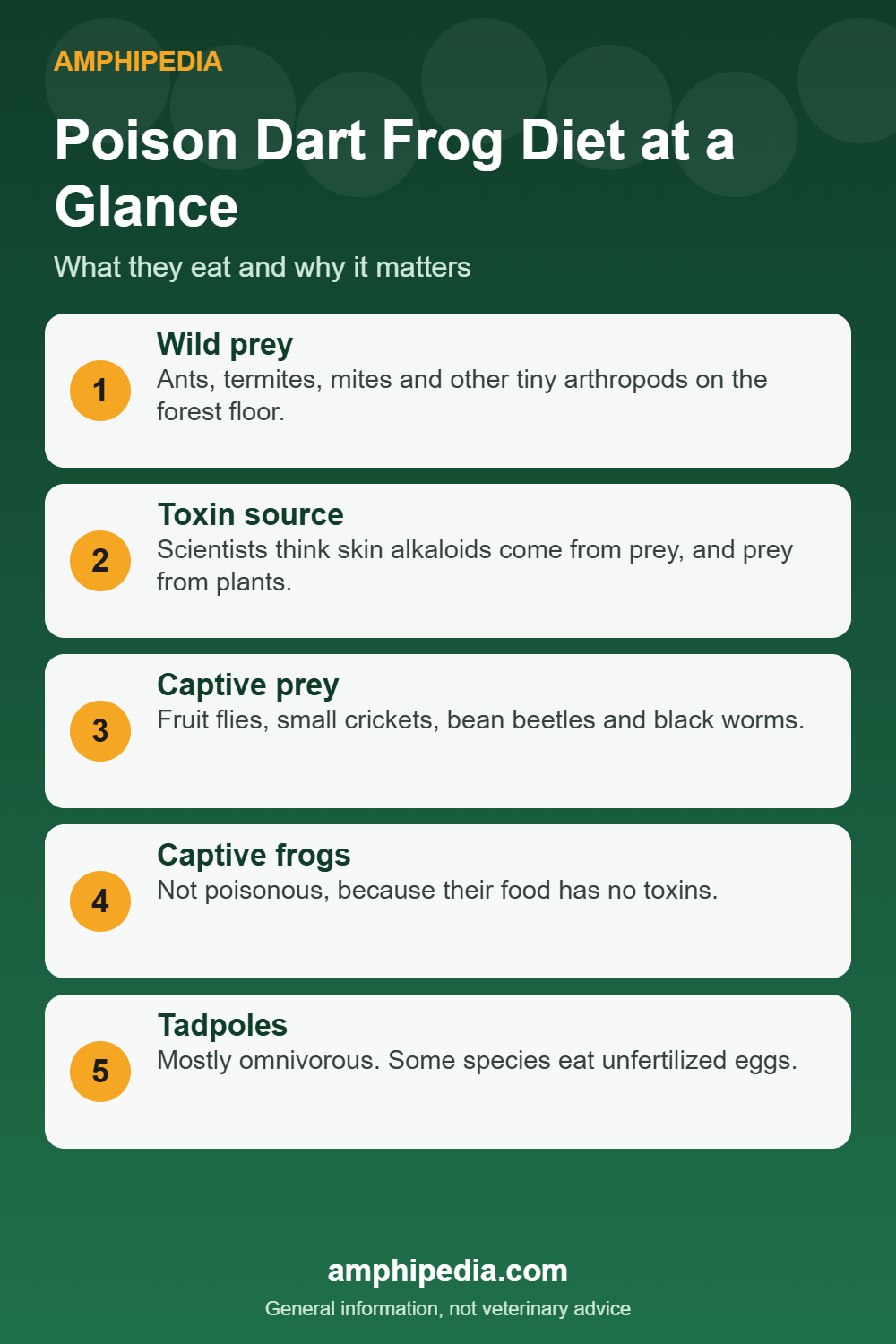
Wild poison dart frogs eat small insects and other tiny arthropods on the rainforest floor, mostly ants, termites and mites. Many of their skin toxins come from this prey. Frogs in zoos and homes eat flightless fruit flies, small crickets and similar feeder insects. Because that food contains no toxins, captive frogs are not poisonous. Diet is the main link between what a poison frog eats and how dangerous it is.
Poison dart frogs are tiny. Most are only 0.75 to 1.5 inches (20 to 40 mm) long. Their prey has to be tiny too.
This guide covers what wild frogs eat, what captive frogs eat, what tadpoles eat, and why scientists think the menu explains the toxins. It is general information about the family, not about one species. Diets differ between species.
How this was made: prepared with AI assistance and checked against the sources listed at the end. Images are AI-generated illustrations, not photographs of real animals or products.
Key Takeaways
- Wild poison dart frogs mostly eat ants, termites, mites and other small arthropods from the forest floor.
- Scientists think the skin toxins come from prey, which likely get them from plants.
- Captive frogs fed fruit flies and crickets are not poisonous.
- Tadpoles eat different food from adults. Some species feed their tadpoles unfertilized eggs.
- Dietary specialization and toxin variety are linked across species.
Pin this infographicShare on Facebook
What wild poison dart frogs eat
The Smithsonian National Zoo says poison frogs mostly eat small insects, such as ants and termites, found on the forest floor. Many catch prey with a sticky, retractable tongue.
Research on 15 species in five genera describes a diet of ants and other small arthropods. Oribatid mites are another major food. These mites are tiny soil animals that live in leaf litter.
Poison dart frogs are mostly active during the day. They hunt by sight in the leaf litter, so they meet many small prey animals that are active in daylight.
Why the diet explains the toxins
Scientists call this the diet-toxicity hypothesis. The frogs take in alkaloids from prey and store them in glands under the skin. The prey likely get the chemicals from plants.
A 2007 study in PNAS found oribatid mites to be a major dietary source of alkaloids in poison frogs. A 2011 study of one mite species, Scheloribates laevigatus, found alkaloids in adult mites that also occur in frog skin.
That mite does not share a range with the frogs in the study, so mites are only part of the answer. The authors describe oribatid mites as a relatively unexplored source of these chemicals.
Wild diet versus captive diet
The Smithsonian National Zoo says frogs fed crickets and other non-poisonous insects are not poisonous. Keepers feed zoo frogs small crickets, bean beetles, black worms or fruit flies, sometimes dusted with vitamin powder.
The table compares the two situations.
| Wild frogs | Captive frogs | |
|---|---|---|
| Typical prey | Ants, termites, mites, other small arthropods | Fruit flies, small crickets, bean beetles, black worms |
| Toxin source | Prey that carry plant-derived alkaloids | No toxins in the feeder insects |
| Skin toxicity | Present in many species | Not poisonous |
| Supplements | None | Vitamin and mineral dusting |
Can poison frogs eat toxic prey safely?
Yes. A Smithsonian National Zoo article says unique genetic mutations keep the toxins from harming the frogs. Digestion does not break the chemicals down. They move to granular glands just under the skin.
When a frog is threatened, it secretes a milky substance from its back. That substance contains the stored toxins.
What tadpoles eat
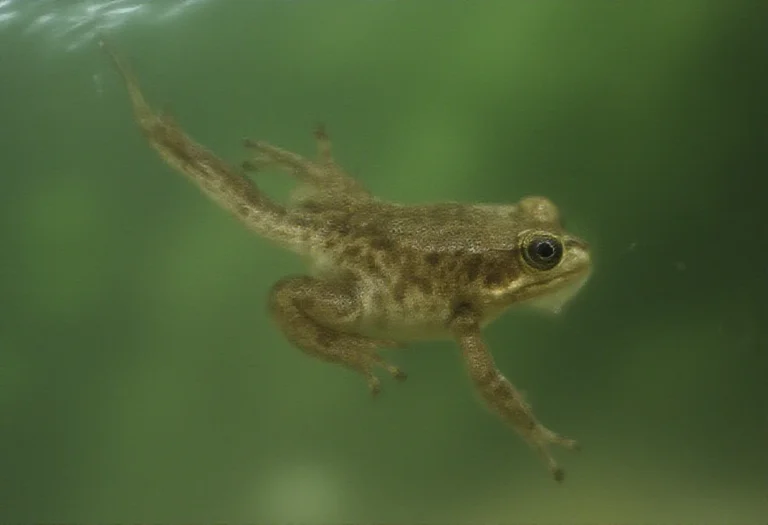
Tadpoles are mostly omnivorous, says the Smithsonian National Zoo. Tri-colored poison frog tadpoles are more carnivorous and eat insect larvae and other tadpoles.
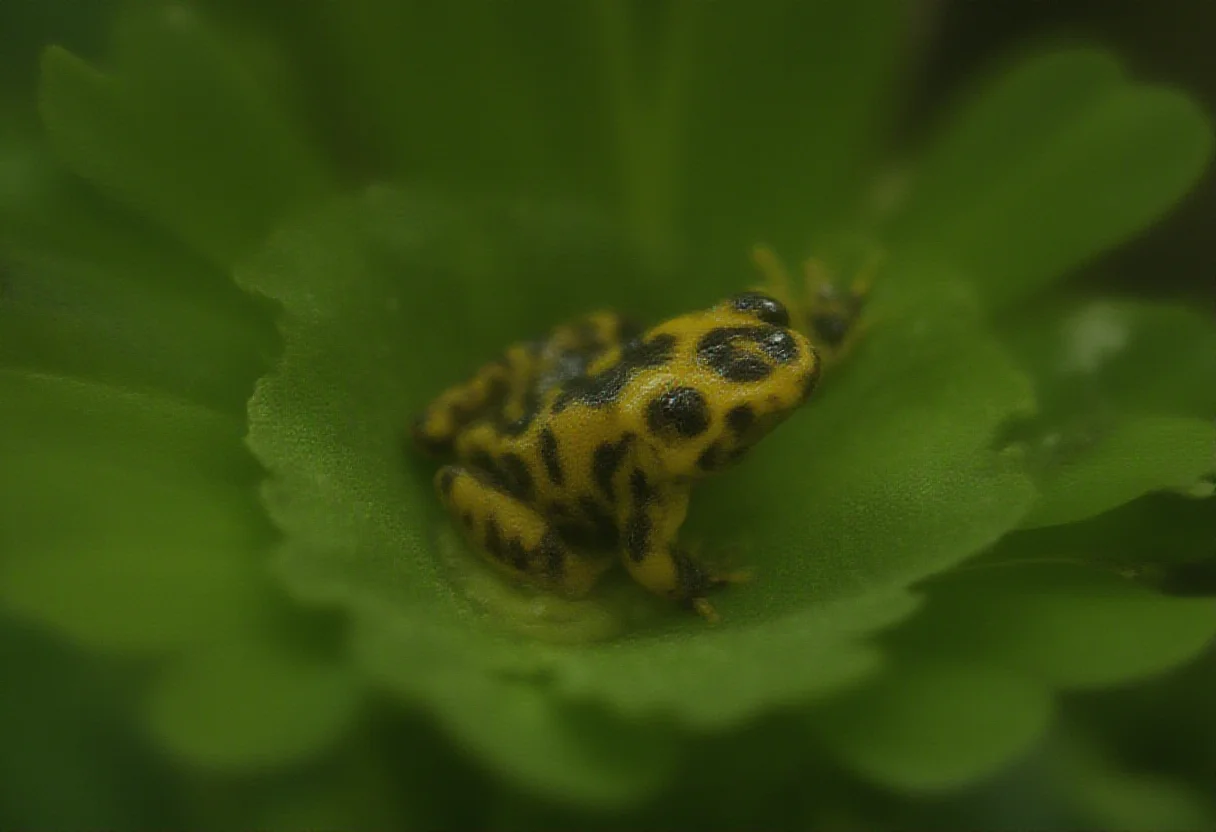
In Vicente’s dart frog, a female lays one egg in each of several bromeliad leaf cups. She returns almost daily to lay an unfertilized egg in the cup as food. Because the eggs contain toxins, the tadpoles also become poisonous.
What the evidence does not show
Diet is not the whole story. Researchers are still working out which prey carry which alkaloids, and how the frogs move them to the skin.
Zoo researchers in Panama are testing whether feeding one toxin on fruit flies and crickets can restore toxicity in frogs. They expect it to take at least a few months. Results were not available in the article I used.
Online posts often say these frogs eat mammals or reptiles. None of the scientific sources above support that. The frogs are far too small.
Frequently Asked Questions
Are poison dart frogs carnivores?
Yes. They eat animal prey, mostly small arthropods such as ants, termites and mites.
Do poison dart frogs eat ants?
Yes. Ants are a main food for many species in the wild. Researchers think ants are one source of the frogs’ skin alkaloids.
Why are captive poison dart frogs not poisonous?
Their food does not contain the toxins that wild prey carry. Without that input, the frogs do not build up a chemical defense.
What do baby poison dart frogs eat?
Tadpoles eat mixed foods. Some species eat insect larvae and other tadpoles. Vicente’s dart frog tadpoles eat unfertilized eggs laid by the mother.
How big is the prey?
Small. Adult frogs are about 0.75 to 1.5 inches long. Panama rescue project frogs eat flightless fruit flies and crickets no bigger than a pinhead.
Do poison dart frogs eat every day?
Zoo frogs are fed small insects daily, according to the Smithsonian National Zoo. Frogs in the Panama study received dosed insects every other day.
Bottom Line
A poison dart frog is what it eats. Ants, termites and mites in the wild give it chemical armor. Fruit flies and crickets in a terrarium do not.
For the full story of how that armor works, read our guide on what makes the poison dart frog poisonous. You can also see how the poison dart frog protects itself.
Sources
- Smithsonian National Zoo: Poison Frogs, accessed Diet, size, tadpoles, captive feeding
- Smithsonian National Zoo: After an Insect Detox, Can Once-Poisonous Frogs Get Their Spice Back?, accessed Toxin storage, resistance, Panama study
- Saporito et al. 2007, PNAS 104(21):8885-8890: Oribatid mites as a major dietary source for alkaloids in poison frogs, accessed Citation record
- Saporito et al. 2011, J Chem Ecol 37:213-218: Alkaloids in the mite Scheloribates laevigatus, accessed 31 October 2026
- Darst et al. 2005, American Naturalist 165(1):56-69: Evolution of dietary specialization and chemical defense in poison frogs, accessed 31 October 2026
One Comment