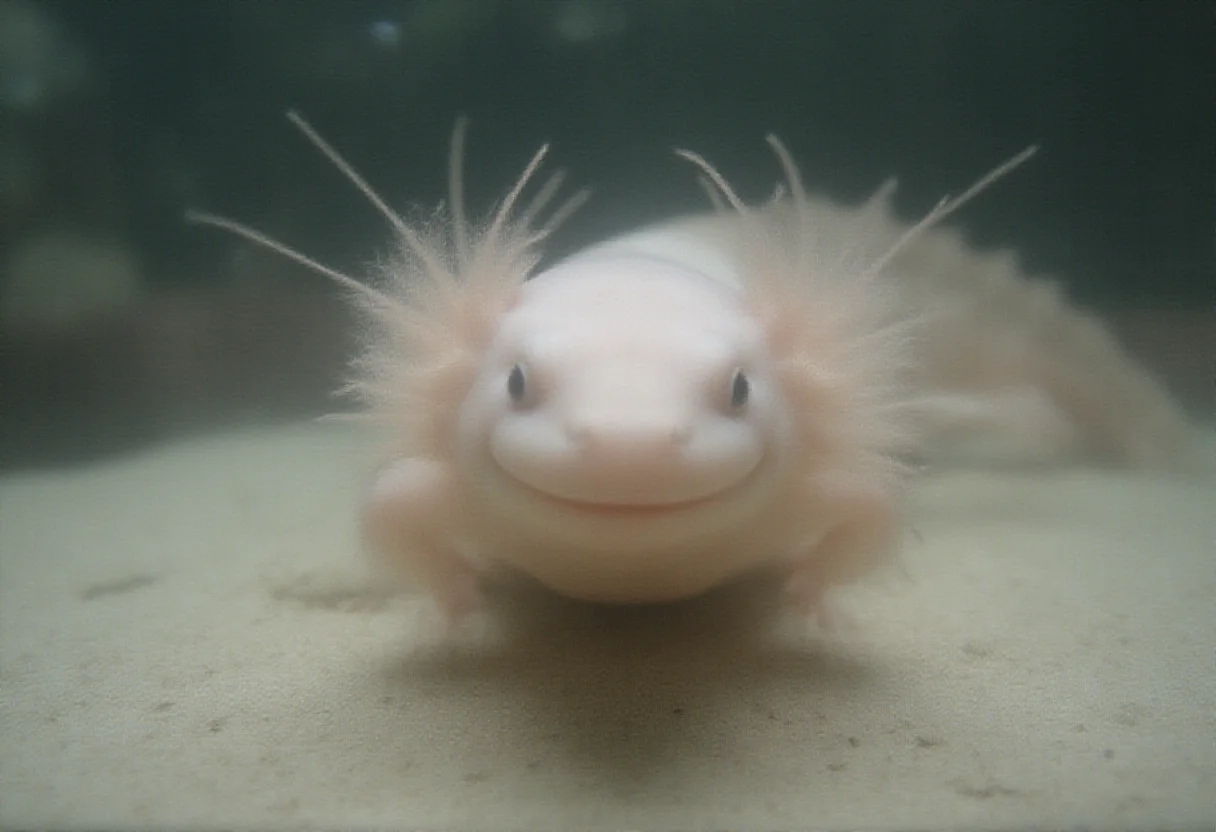
Fun Facts About Axolotls: 10 Surprising, Sourced Details
Axolotls are salamanders that keep their feathery gills for life, regrow limbs and parts of the spinal cord and brain, sense prey through electrical fields and lay 100 to 300 eggs a year. They come from high lakes near Mexico City and are Critically Endangered in the wild. Each fact below is tied to a source.
Axolotls get plenty of viral attention, and not every claim online is true. This list keeps to facts that appear in sources such as Animal Diversity Web, Smithsonian Magazine, the Royal Veterinary College and a veterinarian-written morph guide.
For the core profile on size, lifespan and range, read our axolotl facts guide. This page is for the surprising details.
How this was made: prepared with AI assistance and checked against the sources listed at the end. Images are AI-generated illustrations, not photographs of real animals or products.
Key Takeaways
- Axolotls keep larval features, including gills, for life.
- They can regrow limbs and parts of the brain, spinal cord, lung and ovary.
- They detect prey with sight, chemical cues and electrical fields.
- A female lays 100 to 300 eggs one at a time.
- Wild numbers are very low, but tanks hold many animals.
Pin this infographicShare on Facebook
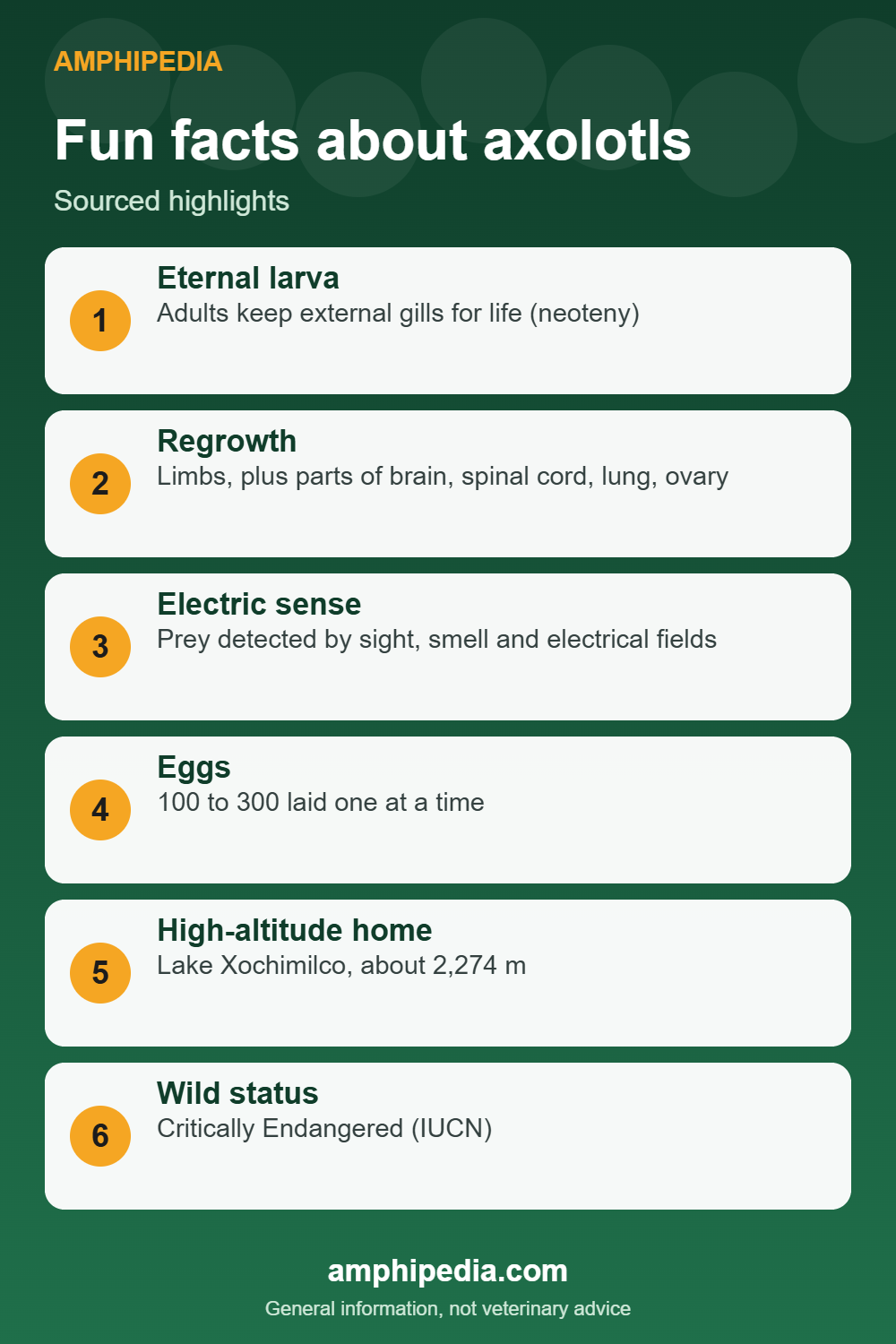
Ten fun facts at a glance
Here is the short version. Details and sources follow.
- Axolotls are neotenic: adults keep larval traits like external gills.
- Their home lake, Xochimilco, lies at about 2,274 metres above sea level.
- They can regrow limbs, with the new limb matching the original size and orientation.
- Regeneration also covers parts of the spinal cord and brain, and lung and ovary tissue.
- They sense electrical fields from nearby prey.
- They will eat their own species.
- A female lays 100 to 300 eggs singly on rocks or plants.
- Some pet and lab morphs are albino, leucistic or melanoid.
- Lab strains with a jellyfish-type gene glow green under blacklight.
- The IUCN lists the species as Critically Endangered.
They never fully grow up
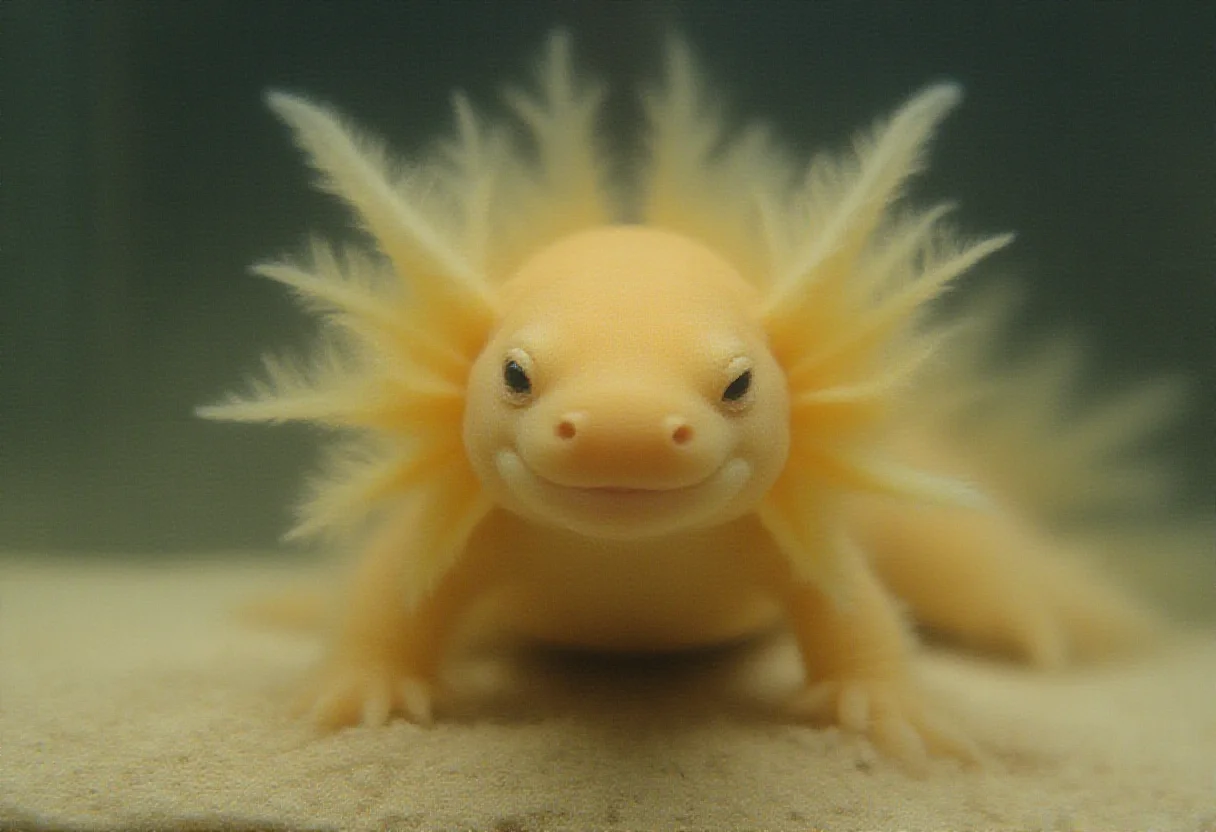
Animal Diversity Web (ADW) describes the axolotl as paedomorphic, or neotenic. It keeps larval traits as an adult, so it stays aquatic and keeps feathery external gills. Metamorphosis can be forced in a lab with thyroid hormone, but ADW says it rarely if ever happens in the wild.
Most lab animals die shortly after metamorphosis, per ADW. So “turning into a salamander” is not a normal life stage. The axolotl already is a salamander.
Regrowth: what research shows
Smithsonian Magazine reports that axolotls can regenerate severed limbs, and the new limb matches the original size and orientation. They can also regenerate lung and ovary tissue and parts of the brain and spinal cord.
After an injury, special skin covers the wound. Cells from nearby tissue gather into a mass called the blastema, which resembles an embryonic limb bud and builds the new part.
Humans can regrow fingertips and some liver, skin and muscle, but not whole limbs. This gap is why scientists study axolotls. The same article notes that 300-million-year-old amphibian fossils show limb deformities consistent with imperfect regeneration.
Senses and hunting
ADW says axolotls find prey through vision, chemical cues and electrical fields. They are carnivores that eat almost anything they can catch, including other axolotls.
The Royal Veterinary College (RVC) describes small, cone-shaped teeth that guide food into the mouth. It says an axolotl can latch onto a hand but cannot pierce human skin. Learn more in our guide to axolotl teeth.
Eggs and babies
Wild breeding generally runs from March to June, once a year. The female picks up a jelly sperm packet left by the male, then lays 100 to 300 eggs one at a time, attached to rocks or plants.
Eggs hatch in 10 to 14 days and the young are independent at once, per ADW. See what a baby axolotl is called for the larval stages.
Colors, glow and chimeras
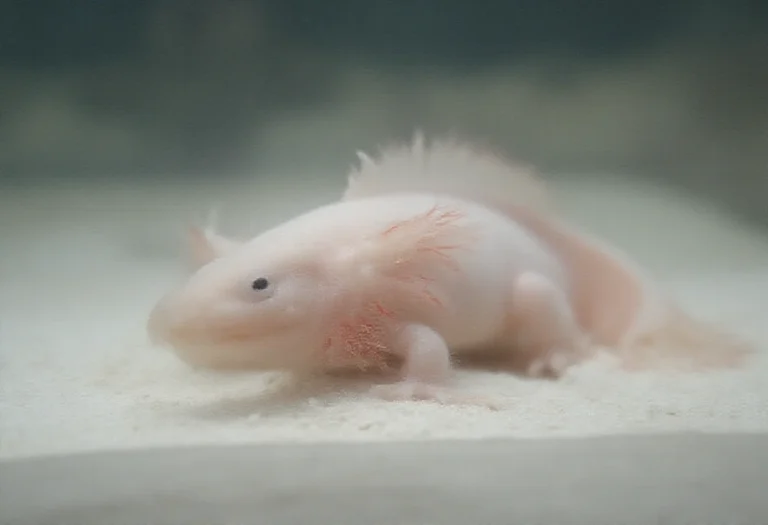
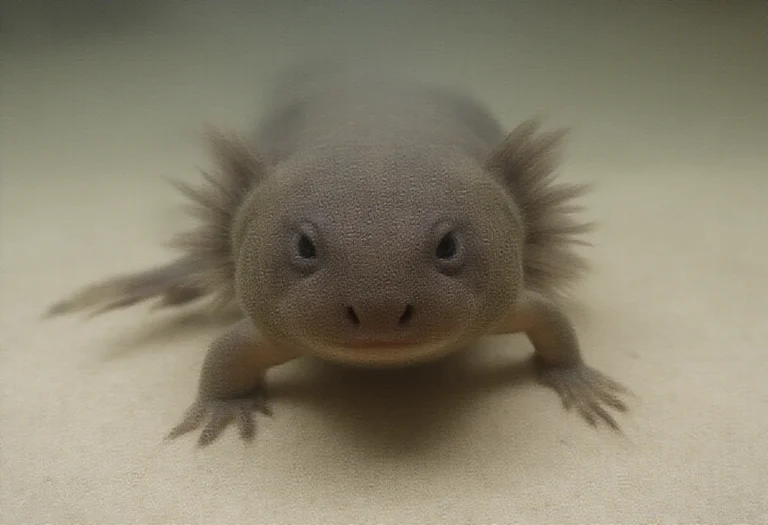
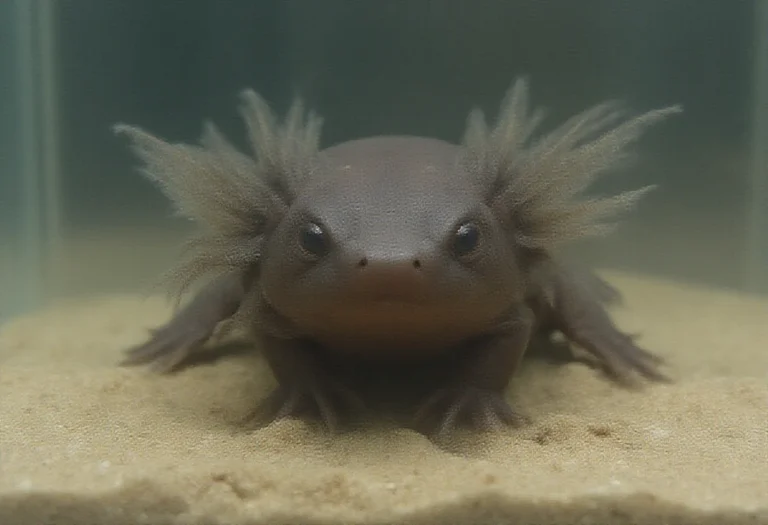
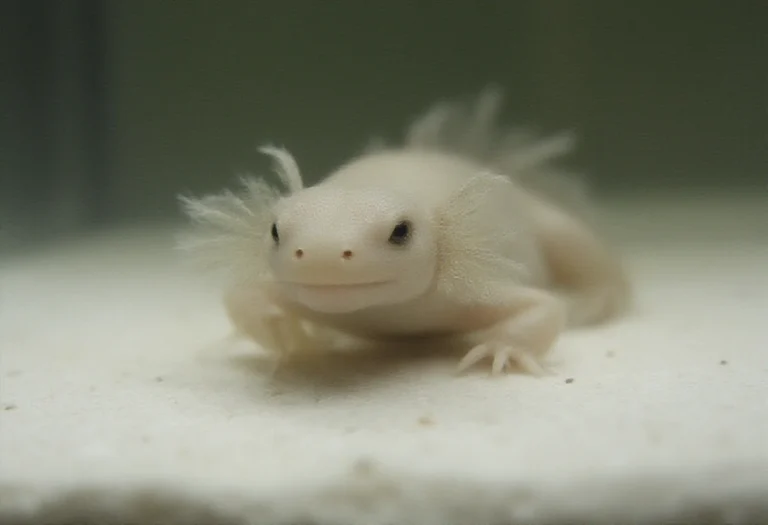
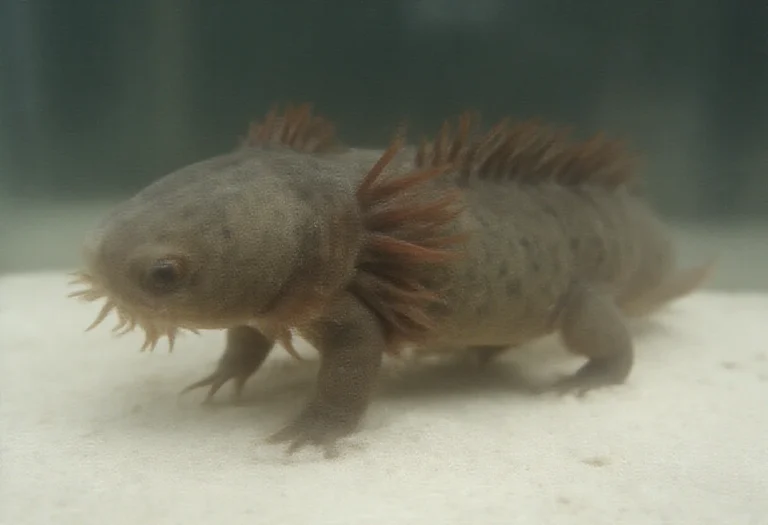
The wild type is dark and mottled brownish-green. A veterinarian-written morph guide at PetMD lists leucistic, golden albino, white albino, melanoid, piebald and more. See our guide to axolotl colours.
Two lab-made types are unusual. GFP axolotls carry an inserted gene and glow green under blacklight. Chimeras come from two fused developing eggs, so one side of the body differs from the other. Read about GFP axolotls and chimera axolotls.
A wild animal on the edge
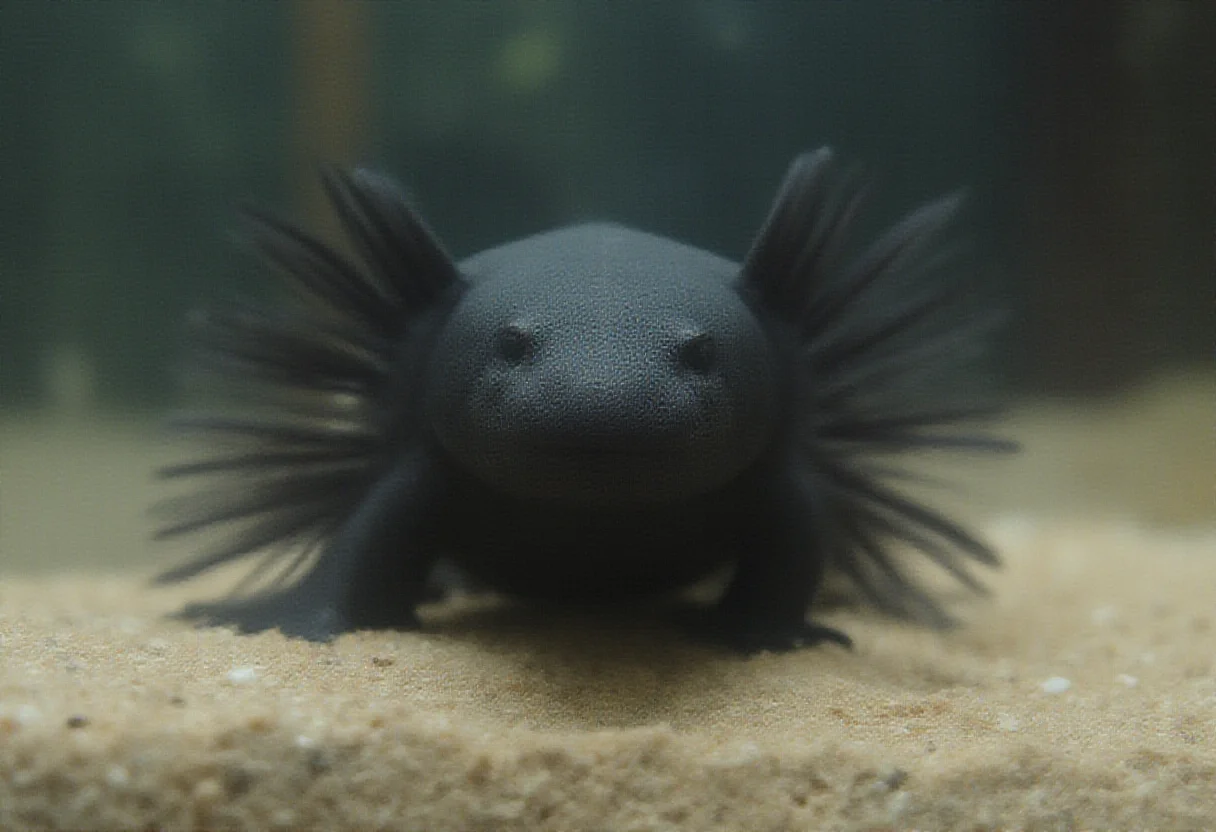
The IUCN Red List lists the axolotl as Critically Endangered, and CITES lists it in Appendix II. Lake Chalco has been drained, and Xochimilco is now mostly canals. See are axolotls endangered.
Fun facts that are not true
A few popular claims fall apart on inspection.
- “Mexican walking fish”: the axolotl is an amphibian, not a fish.
- “They regrow anything”: sources name specific tissues, not every organ.
- “They always live 15 years”: RVC says 10 to 12 years is common, and ADW reports 5 to 6 in labs.
- “They bite hard”: RVC says they cannot pierce human skin.
Frequently Asked Questions
What is the most surprising fact about axolotls?
Many people pick regeneration. Smithsonian Magazine reports that axolotls can regrow limbs and parts of the spinal cord and brain.
Do axolotls really smile?
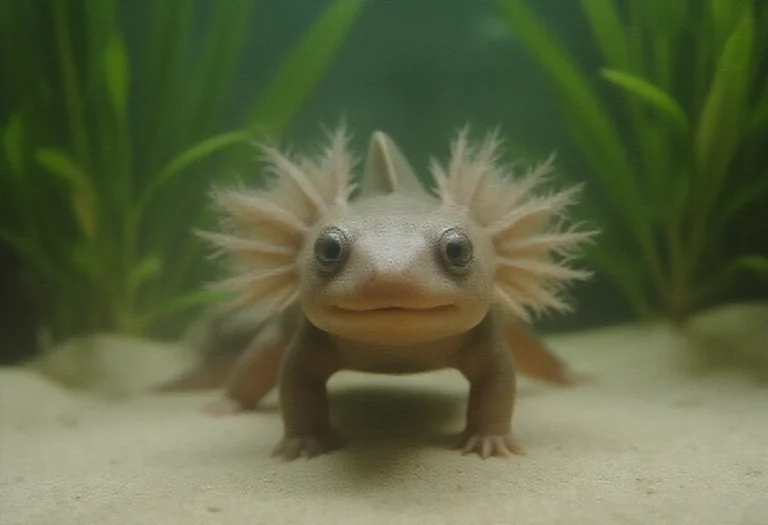
They have a wide mouth that looks like a smile. The sources used here do not describe it as an expression.
Can axolotls glow?
Only lab-made GFP axolotls glow, under blacklight, because of an inserted gene. Normal axolotls do not.
Are axolotls fish?
No. They are amphibians, specifically salamanders.
How many eggs does an axolotl lay?
A female lays 100 to 300 eggs singly, per ADW.
Why are axolotls endangered?
Habitat loss, poor water quality and introduced predatory fish are named as causes. See our survey numbers guide.
Bottom Line
Axolotls are neotenic salamanders that regrow limbs, sense prey electrically and lay hundreds of eggs. Lab strains can even glow under blacklight.
Enjoy the trivia, but keep the facts straight: they are not fish, they are not common in the wild and they need cold, clean water at home.
Sources
- Animal Diversity Web: Ambystoma mexicanum, accessed Neoteny, senses, eggs, habitat, status
- Smithsonian Magazine: Some salamanders can regrow lost body parts, accessed Regeneration and blastema
- Royal Veterinary College: Axolotl care and advice (2022), accessed Teeth, lifespan, temperature
- PetMD: Axolotl colors, accessed Morph list, GFP, chimera
- CDC: Reptiles and amphibians, accessed Salmonella hygiene
One Comment